v1.0.0

AndAnotherDay is a team of experienced digital marketing experts....

The name primarily used in all communications should be compounded, in Pascal case (AndAnotherDay) to avoid it breaking over more than one line. When referring to the official, registered company name it should be And Another Day Ltd.

We can use the name AAD in copy where we have already used AndAnotherDay twice already or when referring to ourselves internally. We should not use this when communicating to prospective clients or the outside world as our main identity.

Except for the registered version we should embolden the name, where possible, in any typed form.

Our brand conveys confidence in our abilities...

AndAnotherDay is a a group of people and that should be reflected in how we talk about ourselves. We should try to use 'we' over 'I' and using collective nouns such as 'team' where appropriate. Of course, when an individual has done something themselves it is acceptable to say 'I'.

Our identity will be the basis of the first impressions an individual or an organisation will have of our brand. It is therefore vital that our brand is presented both externally and internally in a consistent manner.

These guidelines are designed assist anyone involved in designing and supplying any collateral which need to be identified as a product or service of our brand.

Our brand visual identity is made of a number of different elements. These elements must be used consistently across all applications and mediums of our identity.

These design guidelines are a reference tool to help you ensure that any item you produce on our behalf contributes to reinforcing, building and maintaining our brand identity and character.

These design guidelines are a reference tool to help you ensure that any item you commission for our brand contributes to reinforcing, building and maintaining our brand identity and character.

When dealing with external suppliers or other external users of our brand, please ensure that the relevant sections are made known to them, and insist that the specifications are followed correctly.

There may be situations which have not been fully covered by these guidelines and there will be occasions when new applications need to be addressed or designed.

When this happens, please contact:
brand@AndAnotherDay.com
+44 (0)1234 555 666

We offer a range of services and activities and our brand should be reflected in all communications, both internally and externally.

With this in mind - built in consistency is one of the most powerful usability principles. This is to say when things always behave the same, new and existing clients/customers or members don't have to worry about what will happen. Instead, they know what will happen based on an earlier experience. With consistent branding and application we can install values, ambitions and most importantly 'character' into our brand.

"Great design is simple" - that is to say, it is always easier to add to a design but a harder skill to take just enough away that you end up with something timeless.

This should always be our design goal.

Our logo is the most visible element of our identity - a universal signature across all communications. It's a guarantee of quality that communicates our passion for why we exist.

It has been crafted to reflect the simplicity and openness of the business in plain black and white.

The shape of the logo and it's use is more important over the use of colours.

Our primary logo is strongly associated with the brand and represents the brand's reputation, values, strengths and goals. It is the brand's fingerprint and is totally unique to the organisation.

Here we will outline how to use the logo to its full impact. You should always follow these rules without exception.

Never redraw or modify the logo. The logo is an integral and inseparable part of their corporate identity and should always be used correctly on internal and external materials including stationery, publications and publicity items.

This logo can be inverted as long as guidelines are followed, please use correct logo application.

invert_colors

The secondary logo is used when the depth isn't available for the primary logo, but there is enough width to include the name with the device.

invert_colors

The tertiary logo is used when the name isn't required, or when it's is too small to be read, making the identity thin and weak. Used mainly on mobile devices in the nav bar.

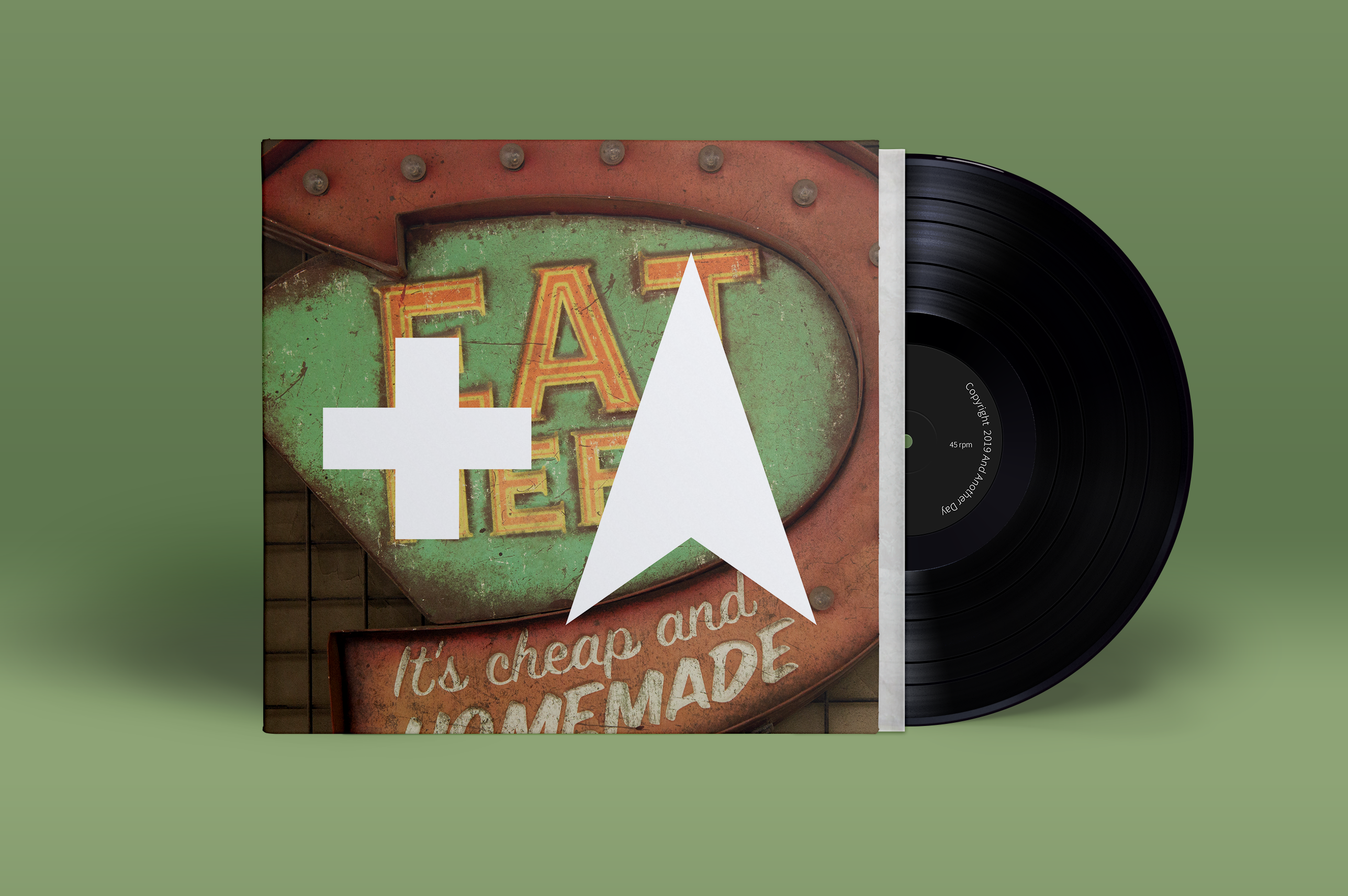
The tertiary logo can have an image applied to the square element, the + and the A must be white and the D must remain black. This will give the impression of a record coming out of a sleeve. This treatment can also be used in a more realistic way by applying detail to the D along with shadows and gradiants.

invert_colors

The icon logo is used when space is limited to a square area to make the most of the strength of the identity. Used mainly for social networks, favicons and "designed by" icons at the bottom of projects.

invert_colors

Our logo should always have a clear area around it, free of any type or graphic device. We call this our exclusion zone.

The exclusion zone is equivalent of twice the width of one of the arms on the + within the logo. This formula applies regardless of the size the logo is produced. This is our preferred exclusion zone and should be adhered to wherever possible.

invert_colors

The suggested size our logo should be used at in print applications is 38mm.

The size has been chosen in order to sit on a 50 unit grid system, which can be applied to any print or digital format.

In print the 38mm logo will use 9 units of grid space. Our robust, flexible grid allows the logo to be placed anywhere on the page providing it snaps to one of the grid points. However for best use of space, we recommend housing the logo in the top row, aligned to the right.

If you need to reduce the logo smaller than the recommended 38mm, always make sure the logo is legible. If it starts to be unrecognisable, please use one of the other versions.

We don't have control over what device our logo will be viewed on, therefore we can not control the size.

When our logo is viewed in a compact space please use the most appropriate alternative version, and ensure the required exclusion zone is adhered to.

When it's viewed in a regular size environment, use the primary logo with the required exclusion zone.

To achieve a consistent and striking image across all applications, it is important that these specifications are adhered to at all times:

  • Never change the colour palette of the logo (Fig. 1)
  • Never remove elements from the logo (Fig. 2)
  • Do not squeeze, stretch or skew the logo (Fig. 3)
  • Never use alternative fonts to the ones specified (Fig. 4)
  • Never use the acronym as a logo (Fig. 5)
  • Never rotate any versions of the logo (Fig. 6)
  • Never use the logotype as a 'wash' background (Fig. 7)
  • Always ensure the logo has maximum contrast impact (Fig. 8)
  • Always use the official digital vector artwork
  • Do not animate the logo or apply effects or filters to it

For our logo bundle please request 'master logos' zip via brand@AndAnotherDay.com

error
Fig. 1
error
Fig. 2
error
Fig. 3
error
Fig. 4
error
Fig. 5
error
Fig. 6
error
Fig. 7
error
Fig. 8

Typography is an essential part of the identity. This includes the words used and the way they are displayed.

We use Brother-1816 for all fonts used for all situations. You must use the alternative letters for all lowercase letters, numbers and punctuation and primary letter-set for capitals. If you are using the correct letters you should have the following characteristics:

Fig. 1
Fig. 2
Fig. 3
Fig. 4
Fig. 4
Fig. 6
Fig. 7
Fig. 8

Use the Primary Typeface, Brother-1816 Book, for all body copy where possible:

ABCDEFGHIJKLMNOPQRSTUVWXYZ
abcdefghijklmnopqrstuvwxyz
1234567890.,;!?()&

Use the secondary typeface, Brother-1816 Medium, for all headings where possible:

abcdefghijklmnopqrstuvwxyz
1234567890.,;!?()&

Use Roboto as the first fallback typeface in the stack for emails as Brother-1816 won't display in Gmail:

ABCDEFGHIJKLMNOPQRSTUVWXYZ
abcdefghijklmnopqrstuvwxyz
1234567890.,;!?()&

Use Helevetica as the second fallback typeface in the stack for emails:

ABCDEFGHIJKLMNOPQRSTUVWXYZ
abcdefghijklmnopqrstuvwxyz
1234567890.,;!?()&

Use Arial as the third fallback typeface in the stack for emails:

ABCDEFGHIJKLMNOPQRSTUVWXYZ
abcdefghijklmnopqrstuvwxyz
1234567890.,;!?()&

Headings are always to be written in title case, Brother-1816 Medium, weight 400, size 40px

Sub-headings are always to be written in title case, Brother-1816 Medium, weight 400, size 22px

Body copy is to be written in sentence case, Brother-1816 Book, weight 400, size 18px

Bullet Style is to be a + in Brother-1816 Medium the same size and weight as the body copy:

  • Example bullet one
  • Example bullet two
  • Example bullet three
  • Example bullet four

The brand typeface for all printed communications including letters, press releases, memos, brochures, direct mail and exhibition graphics is Brother-1816. Use this font whenever possible. Never use any of the condensed versions of this typeface.

We use only two weight of this typeface - Medium for headings and Book for body copy.

Always ensure typography is clean and clear. Don't be afraid of white space. Make your point concisely and avoid over writing. All public medium type should be set in sentence case and left justified without hyphenation. Only use caps with headers.

Always ensure the type is legible in size, context and contrast. Text should always be flat without any treatments or effects.

The corporate typeface for all digital communications including Microsoft PowerPoint presentations, emails and websites is Brother-1816, with fall-backs Google Sans, Helvetica then Arial. Follow the rules for printed communications at all times.

Our main corporate colours are black and white. To stand out for the crowd we will endeavour to use black backgrounds wherever possible with the exception of materials which we expect to be to be printed, such as invoices and letters where it can be inverted.

When it comes to emails, articles or document cover pages we will use secondary rules which will involve using a bold colour. The colours can come from a variety of sources depending on the situation:

When producing printed communications, whether printed in-house or by an outside supplier please always use either the CMYK or Pantone® references. For accurate examples of these colours please refer to a Pantone® swatch book or a CMYK swatch book.

When using colour in Microsoft® applications (such as Word® or PowerPoint®) or for online communications always use the web values shown on this page.

The logotype must appear in the colours specified for online use. It should always be exported with an alias and in a minimum of 16 colours.

We will always use the Sharp Material Design Icons for all iconography, for consistency.

Material icons are delightful, beautifully crafted symbols for common actions and items. Download on desktop to use them in digital products for Android, iOS, and web.

The icons should always be used for their intended use. If an icon doesn't already exist for an intended use you will need to create one rather than repurpose an already established icon.

For web projects, the best format is the icon web font.

Our charts are an integral tool in our day-to-day communication of our business. They are a clear and visually engaging way of displaying information that may otherwise be difficult to convey. Our infographics should be sophisticated and beautiful yet always functional and should be viewed with as much importance as our photography styles.

Make your infographics as simplistic as possible by stripping out any data that is unnecessary. Only communicate what is needed.

Remember to use the most appropriate chart style for your data, to ensure the user can clearly read the information.

We have 3 versions of infographics:

Our visual language is divided into four types:

Fig. 1
Fig. 2
Fig. 3
Fig. 4

When people talk about brands, they often give the impression that communicating what brands stand for is mostly to do with visual elements such as brand marks (or logos), fonts, corporate colours and choice of imagery.

But at AndAnotherDay, we believe that the strongest brands are those that also use words to convey their distinctive essence. Our entire brand communication system has been developed on this basis: that the visual and the verbal should work hand in hand to communicate, coherently and compellingly, what makes us different.

Our language guidelines are intended to help you find the right words. They set out how we should phrase, punctuate, spell and capitalise words and phrases that often arise in our internal and external communications.

If you don't understand your audience it's impossible to write in a way that reflects their point of view - you'll be overly focused on what you want them to know, rather than thinking about what they may be interested to learn. You risk boring them by telling them what they already know, or confusing them by using language they don't understand.

Always assume intelligence - there's no easier way to alienate readers than by patronising them or writing in a way that insults their intelligence. However little knowledge your audience may have of the subject in question, always assume that you are addressing intelligent individuals. Above all, avoid writing in a way that sounds as if you're trying to impress people with empty claims and hollow marketing speak.

It's impossible to know what you need to say - and how you need to say it in order to get the result you want - if you are not clear about your objective. For example, knowing that your objective is simply to make your audience aware of an issue will enable you to gauge the amount of information they will need (far less than if your objective is to make a sale).

At AndAnotherDay, we are committed to ensuring that our clients get unprecedented access to clear and relevant information about their projects - and we believe the use of plain English in all of our communications will help to ensure client understanding.

To be clear, this is not about being patronising or oversimplifying our content and messages - and of course different language will be appropriate for different audiences. The goal of plain English is simply communication that the intended audience will understand the first time they read it. Language that is familiar to that audience will be plain to them.

The tone of all our communications should be clear and transparent, direct and concise and engaging and confident.

As a company who needs to get the trust of potential and existing clients we need to be confident - in tone and message. There are a number of ways to reflect this confidence in our communications, including:

  • Rather than making 'claims' about our experience and knowledge, provide specific examples - relevant to the audience - that will help them reach the conclusion themselves. This doesn't mean that making bold statements on behalf of AndAnotherDay is always wrong - it simply reflects our belief that rather than talking about our achievements, we should deliver them
  • Where possible, phrase sentences in the active voice to 'take ownership' of the action (for example, use we will do rather than it will be done
  • Use verbs as verbs and don't turn them into longer, unnecessary noun phrases or nominalisations (for example, use 'we arranged' rather than 'we made arrangements for', 'we intend' not 'our intention is' and 'we discussed' rather than 'we had a discussion'
  • Never be afraid to admit a mistake. They can happen and customer will have more trust in us if we put out hands up if something goes wrong

Good writing sets out to create a relationship and a rapport with the reader. One of the simplest ways to do this is by addressing the reader directly and personally, using the first person (I, we or us) whenever possible - and even more importantly, addressing the reader as 'you'.

For example, use "If you need help, you can always contact us", not "AndAnotherDay invites clients in need of help to contact it".

Here, we're talking about going further than keeping it personal - we're talking about the critical importance of making your readers feel that you understand their point of view and are addressing their interests and priorities. This is fundamental to ensuring our current and prospective clients feel part of an ongoing dialogue or conversation with us.

Achieving this is largely to do with content - continually ask the question, as you write, is this piece of information relevant / interesting to this audience?

But it should also influence how you write. Engaging writers are constantly bringing their reader into the conversation.

In particular, questions can play an important part in being engaging because, in effect, they can give the reader a voice, turning a monologue into a dialogue.

Keep all communications, whether in articles or direct to clients, upbeat and optimistic. For example, don't criticise a browser for things you don't like about it but tell the client it's a know feature and that we know how to work around it

These days, everyone has too much to do and too little time. So, whatever you're writing, you should always assume that your readers are busy and have other things they could or should be doing.

It follows that you should do everything you can to make it easy for them to get what they need out of what they are reading:

  • Aim for a mix of long and short sentences to add interest and variety
  • Remember dense sections of type can look daunting so break up your paragraph
  • Don't be afraid to use bullet points, where appropriate
  • Numbering things can also help your reader
  • In your introductory paragraph, aim to give your readers a sense of the whole story you have to tell
  • Get your key points across early - never bury a strong argument or claim on page 7, because busy readers may never get that far
  • Use section headings to signpost what follows and break up long sections of text with sub-heads

Grammar is the system and structure of a language. Letters are put together to make words, words are put together to make sentences and grammar is the glue that holds it all together. If you don't use the glue properly or if you use the wrong glue then the reader may struggle to understand the message.

When you are presenting a bulleted list, introduce it with a colon - unless the list sits directly under a heading or subhead in which case you don't need to use a colon. Do not put any full stops at the end of your bullet points (even if there are multiple sentences within the bullet point) and begin each new bullet point in upper case.

Always ensure that you use British conventions rather than American (for example, organisation not organization, realise not realize, meet not meet with, talk to not talk with and colour not color).

We do not use 'www' when referring to our own or others' websites. So, for example, we use AndAnotherDay.com or bbc.co.uk.

Social Media is key to our communication with the our clients and the outside world. It is important that we project the correct message without mistakes, and with consistency.

Social media idents should always be shown in a strong way to reflect our core brand - in a solid square with the icon reserved out.

Post directly into Facebook wherever possible or from within Hubspot. Use engaging imagery based on the visual rules set out in the guidelines. Tag relevant clients wherever possible when promoting project work. Never use hashtags.

Use engaging imagery based on the visual rules set out in the guidelines. Always capitalise the first letter of each word in the hashtag. This makes it easier to read, adds gravitas to the phrase and reflects the Pascal case:

  • #AndAnotherDay
  • #UserInterface
  • #DesignInspiration
  • #WebDesign
  • #InboundMarketing

Never use the hashtag #AAD as this is used heavily by the American Academy of Dermatology

Post via a social media management tool or directly. Try and use engaging content such as video or images where possible. Regularly review trends on Twitter to see if there is a popular hashtag that we can use that day. Use relevant handles to engage with clients, businesses and other organisations.

Always capitalise the first letter of each word in the hashtag. This makes it easier to read, adds gravitas to the phrase and reflects the Pascal case:

  • #AndAnotherDay
  • #UserInterface
  • #DesignInspiration
  • #WebDesign
  • #InboundMarketing

Never use the hashtag #AAD as this is used heavily by the American Academy of Dermatology